Le Sirenuse vs Il San Pietro vs Covo dei Saraceni
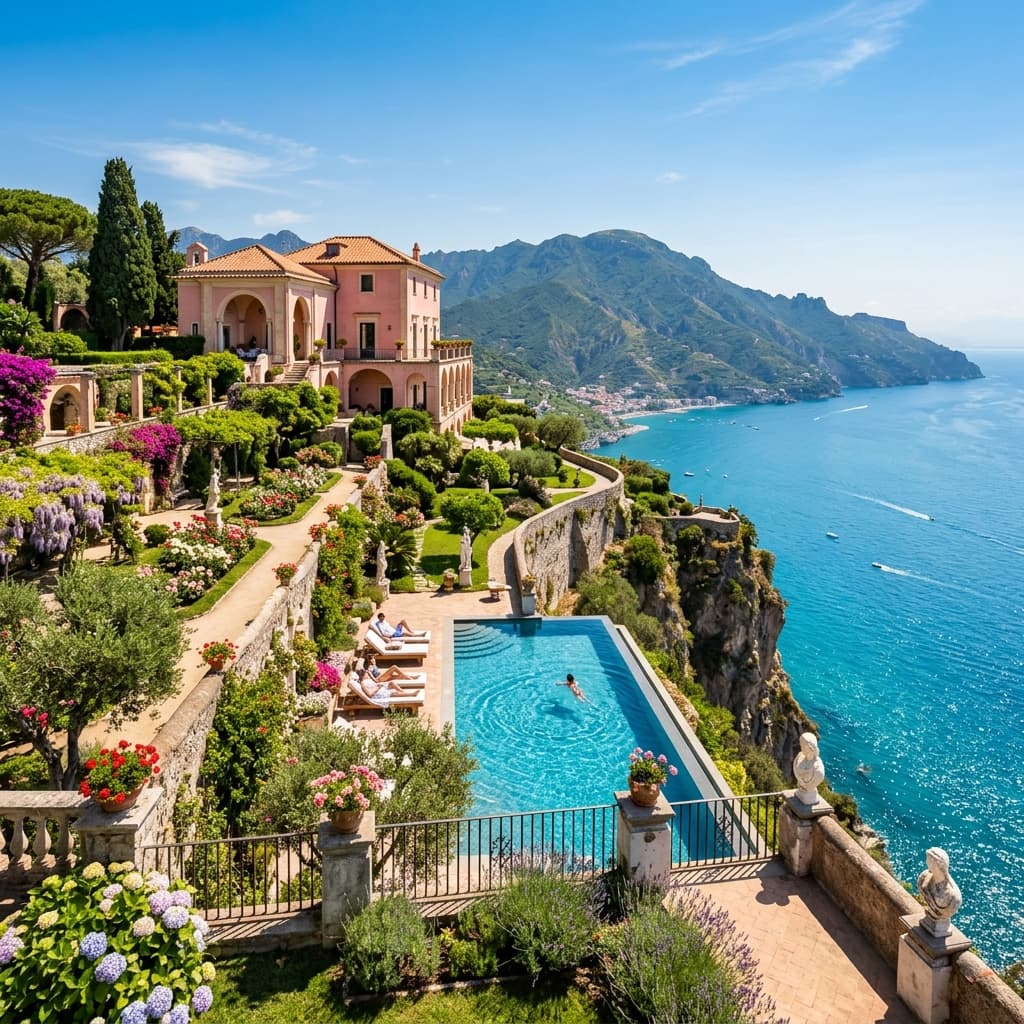
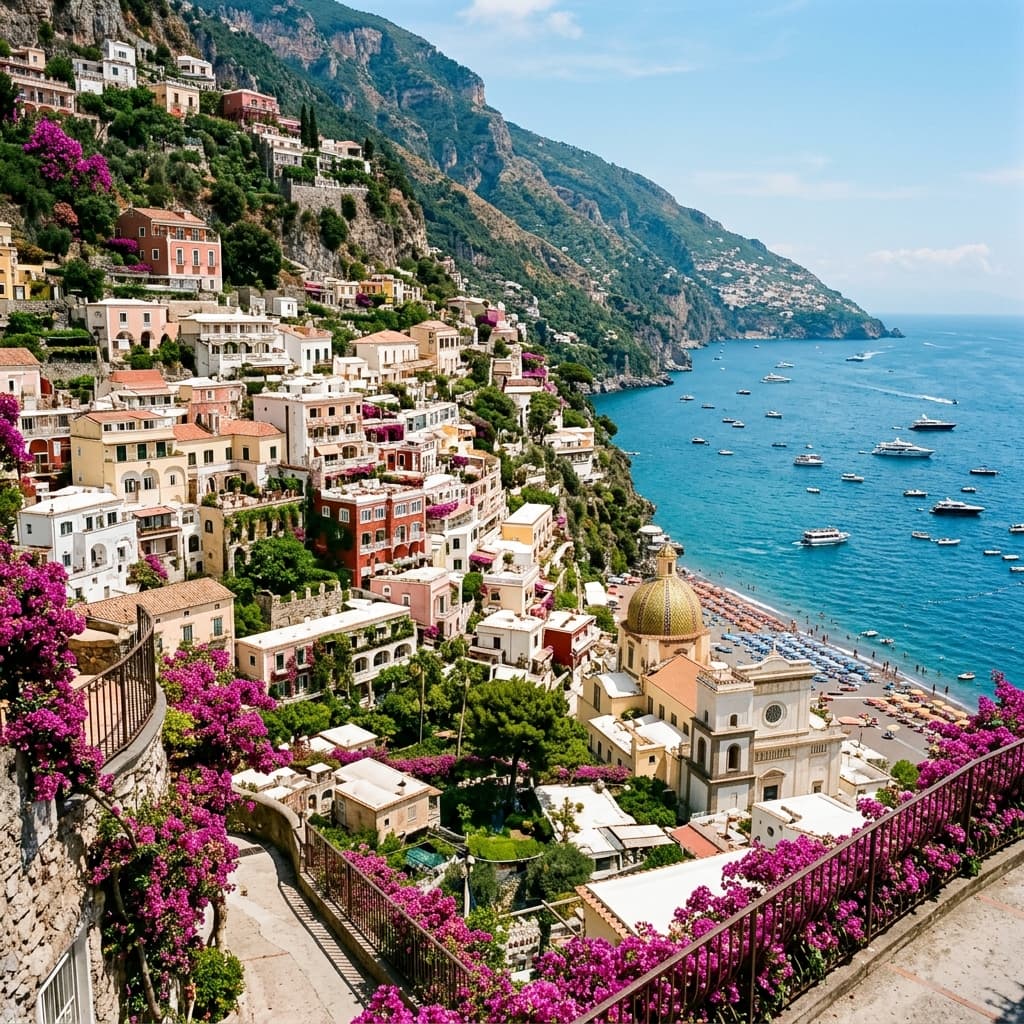
Le Sirenuse, a former private villa in the heart of the village, is Positano's social and culinary landmark. Il San Pietro di Positano sits on its own cliff a short drive outside the centre, with a private elevator down to its own beach cove — the quieter, more secluded of the two icons. Covo dei Saraceni, directly on the harbour, offers a lower-key, more accessible base for those who'd rather walk out onto the beach than take a shuttle to it.
Beach access and boat culture
Spiaggia Grande, the main beach, is lined with sunbed concessions and restaurants; Il San Pietro's private cove offers an alternative for guests who prefer not to share the sand. Day boats to Capri depart directly from the harbour, typically 45 minutes to an hour offshore.
“Positano has exactly one flat surface — the beach — and every hotel here is built around the climb down to it.”
Getting to Positano
Fly into Naples (NAP), then a private transfer or ferry — there's no train to the coast, and the road is narrow and slow in summer traffic. Ferries connect Positano to Amalfi, Sorrento and Capri, often faster than driving between towns.