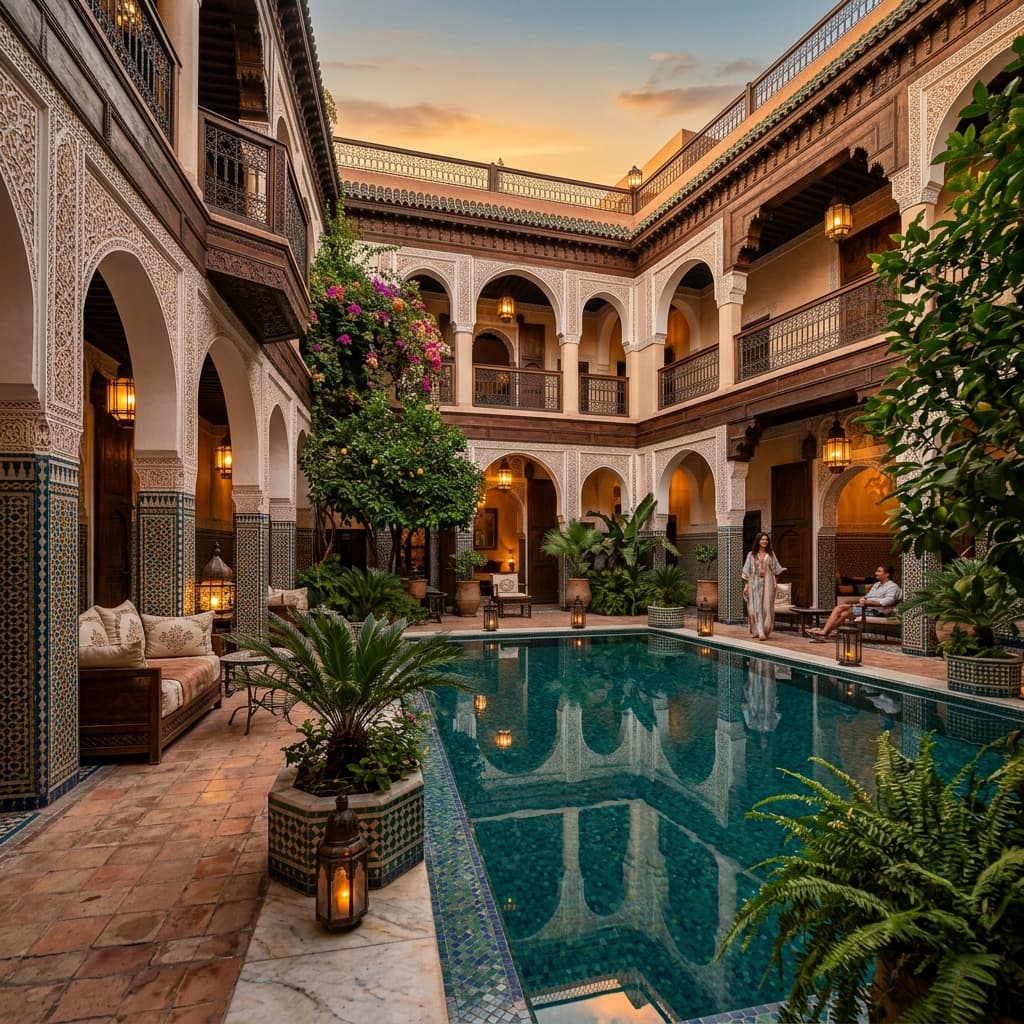
Marrakech Travel Guide 2025
Marrakech
Riads, rooftop terraces, Sahara sunsets — Morocco's Red City is having its most exciting moment in decades.
Visitor arrivals to Morocco surged 23% in early 2025 — and Marrakech is leading that wave. The city has shed the reputation it carried in the 2010s (overpriced, overwhelming, tourist-trapped) and replaced it with something genuinely compelling: a luxury infrastructure that rivals Tuscany, a food scene that finally matches the hype, and a riad culture so refined that 'staying in Marrakech' has become shorthand for a very specific kind of beautiful.
American Express Travel listed Morocco as a top 2026 destination. Booking.com flagged Marrakech as one of its fastest-growing luxury markets. Elite Traveler named it an 'emerging contender' in a category previously dominated by Italian and Greek islands. The timing, for The Travel Club, is perfect.
Member rates at Marrakech's best riads and palaces sit 30–50% below public prices — particularly in the Medina where properties don't need to advertise to fill rooms. This guide covers everything you need to know to have the version of Marrakech that most visitors don't find.
Best time
Mar–May / Sep–Oct
Currency
Dirham (MAD)
Language
Arabic / French / Berber
Time zone
WET (UTC+1)
Airport
Marrakech Menara (RAK)
Member savings
Up to 50% vs. public rates
Where to stay
Medina (Old City)
Ancient, labyrinthine, unforgettableThe [UNESCO-listed Medina](https://whc.unesco.org/en/list/331/) is where Marrakech actually lives. The souks — leather, spices, lanterns, textiles — spiral through alleys that haven't changed in 800 years. Djemaa el-Fna square transforms from market to open-air theatre at sunset: snake charmers, storytellers, rows of food stalls serving harira and merguez sausages. The best riads hide behind unmarked wooden doors in these alleys — you'd never find them without a contact.
Gueliz (New City)
Relaxed, contemporary, café cultureBuilt during the French Protectorate, Gueliz is walkable, leafy, and home to the city's best gallery district — particularly around Rue de la Liberté. Modern Moroccan restaurants, wine bars (Morocco produces excellent Syrah), rooftop pools, and boutique hotels that trade the riad experience for modern comfort.
Palmeraie
Pure luxury, resort atmosphereThe palm grove district north of the city is where the biggest resort properties sit — Amanjena, Royal Palm, and the satellite villas of La Mamounia, the grande dame reviewed by Robb Report as [one of the world's greatest luxury hotels](https://robbreport.com/travel/hotels/marrakech-la-mamounia-worlds-greatest-hotels-1235474826/). Isolated, quiet, and oriented around pools, golf, and spa treatments that last most of the day. A transfer into the Medina is 20 minutes and worth every trip.
Member hotels in Marrakech
Browse all Marrakech hotels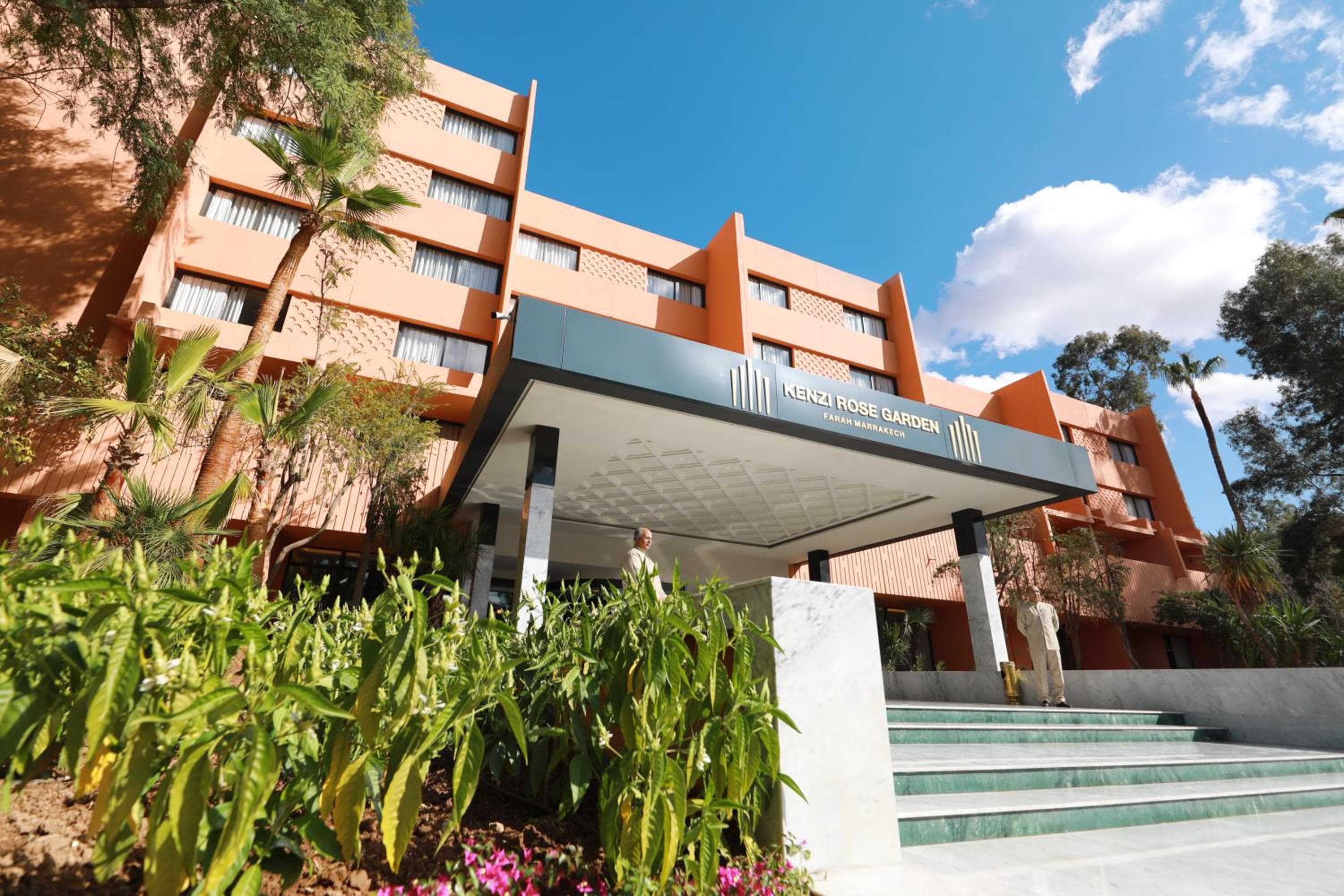
Kenzi Rose Garden
Marrakech, Morocco
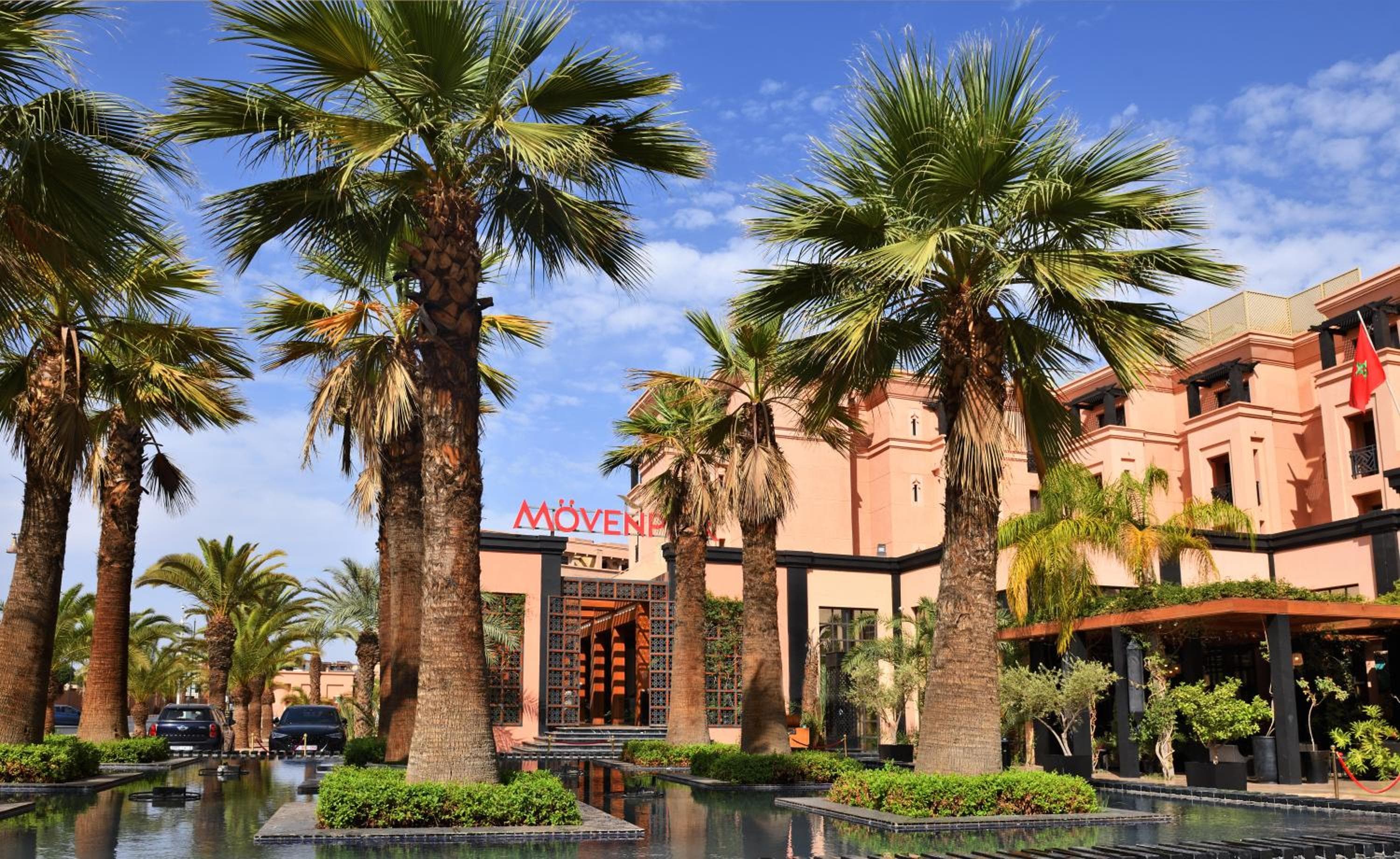
Mövenpick Hotel Mansour Eddahbi Marrakech
Marrakech, Morocco
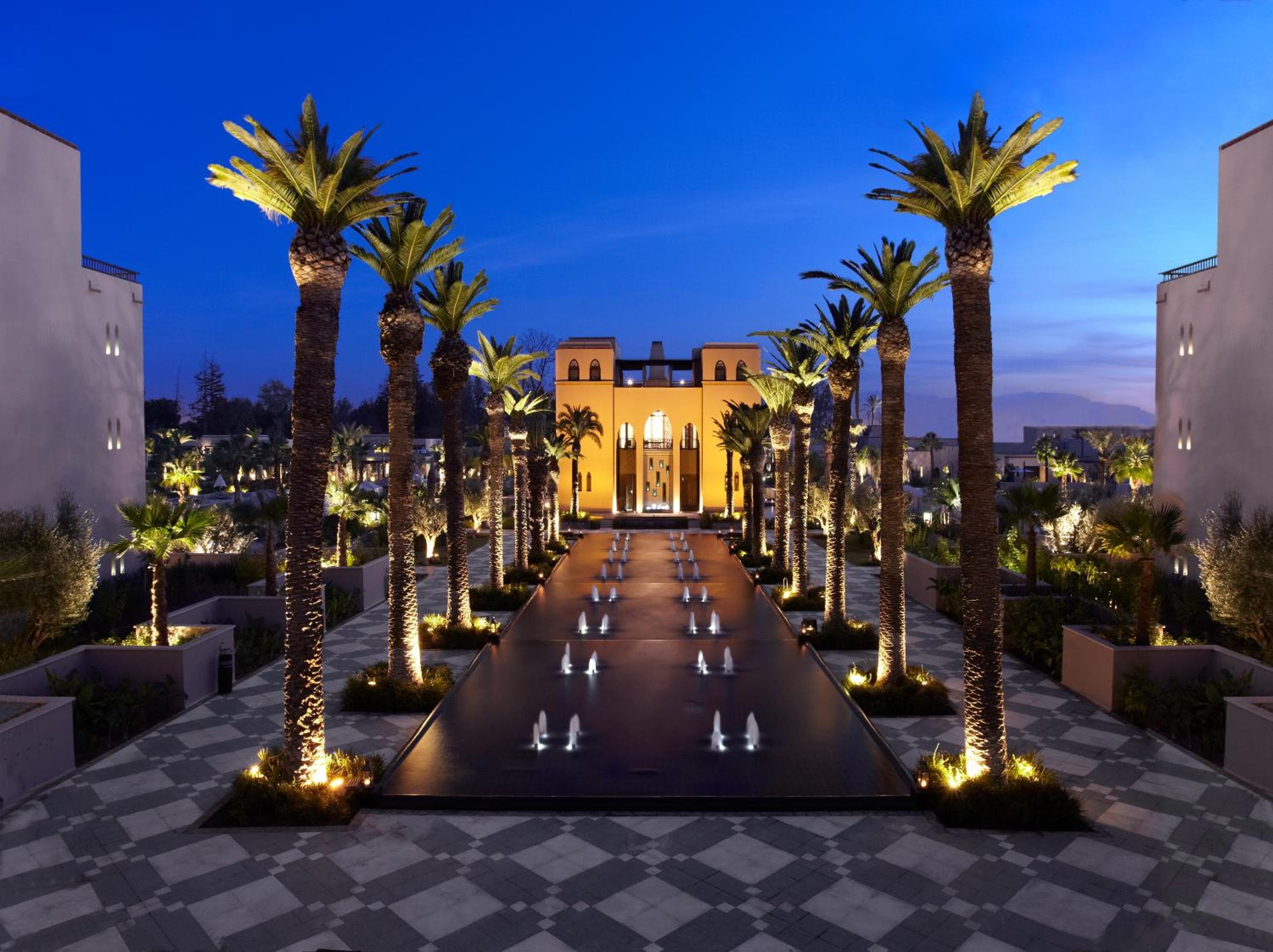
Four Seasons Resort Marrakech
Marrakech, Morocco
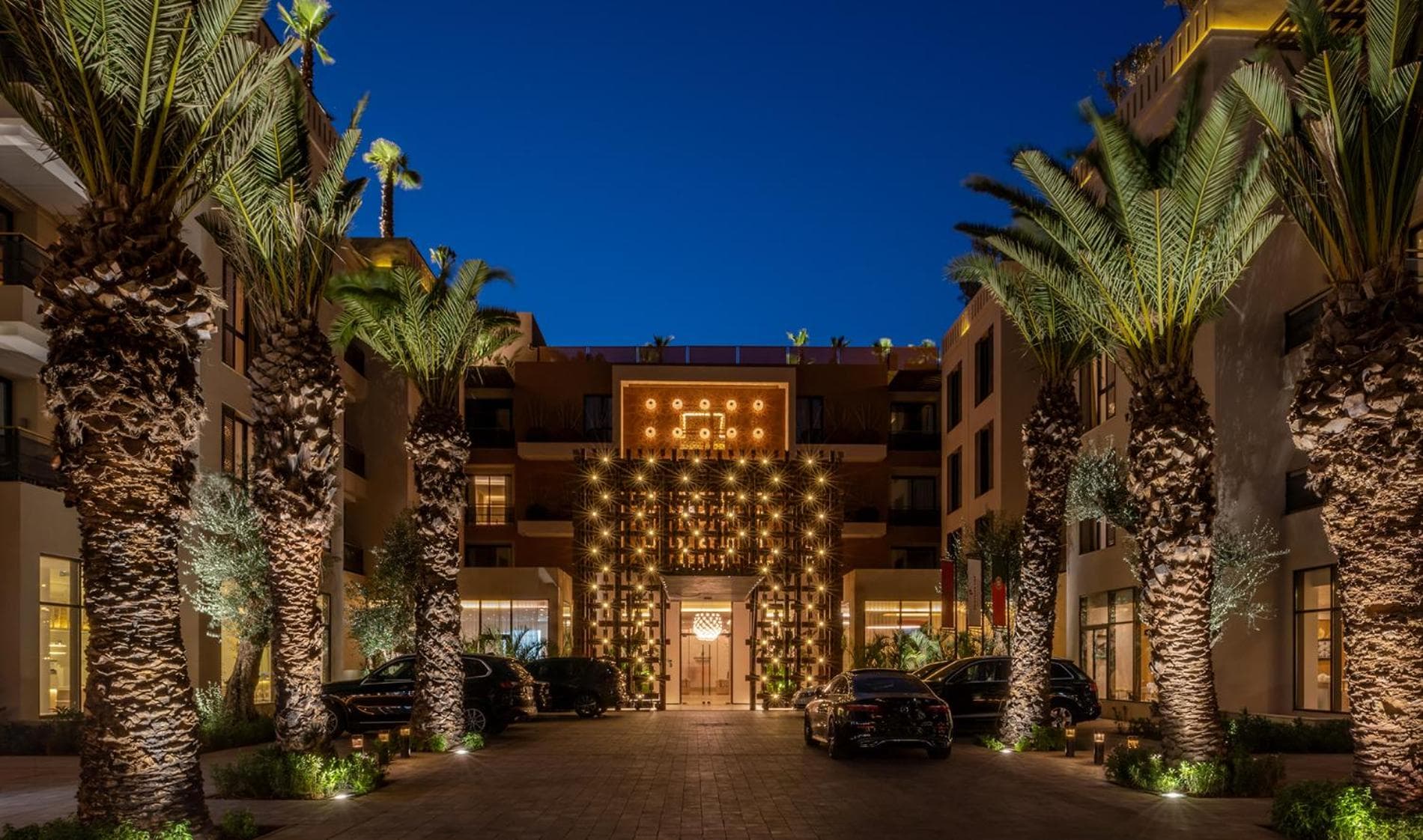
Pestana CR7 Marrakech
Marrakech, Morocco
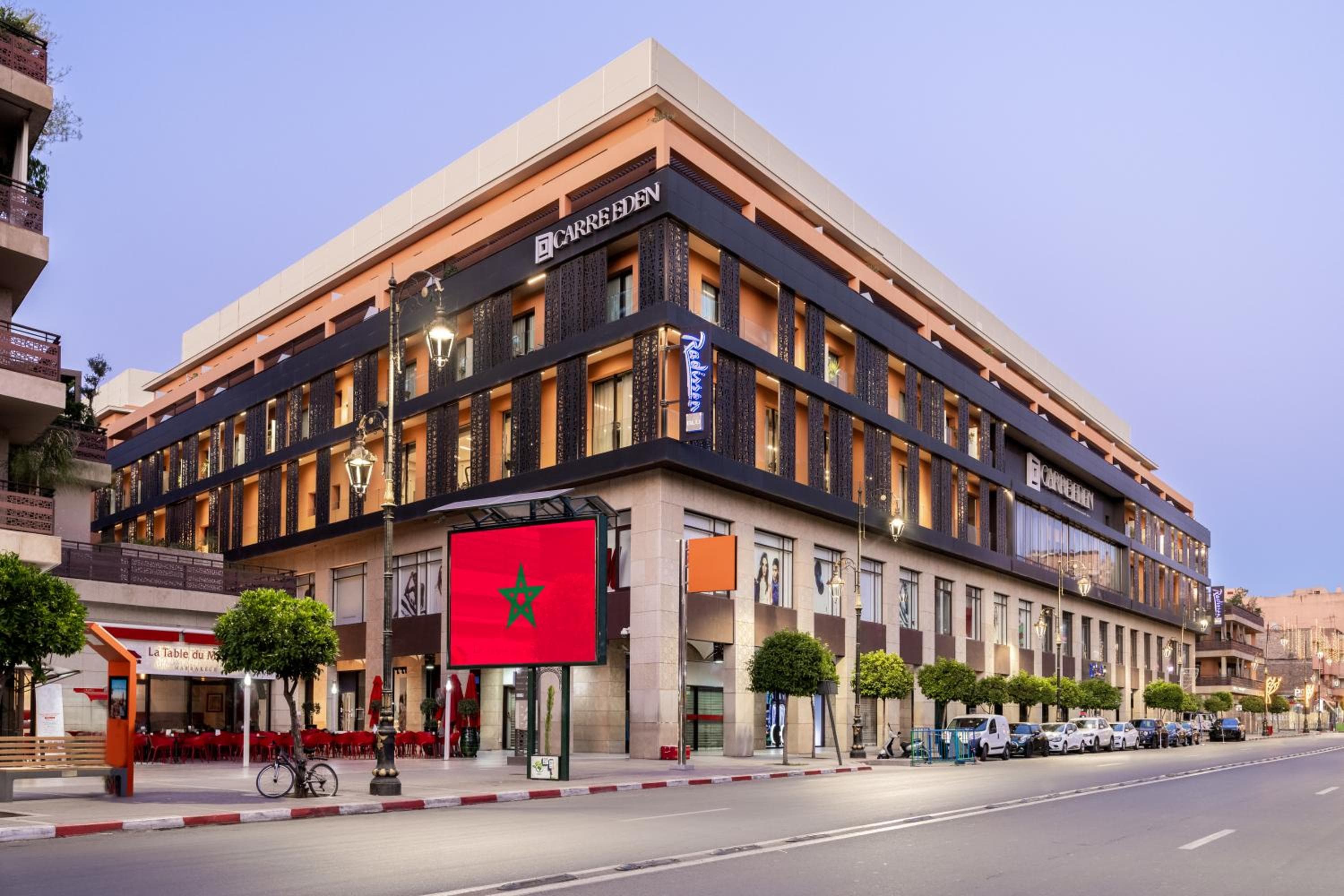
Radisson Blu Marrakech, Carré Eden
Marrakech, Morocco
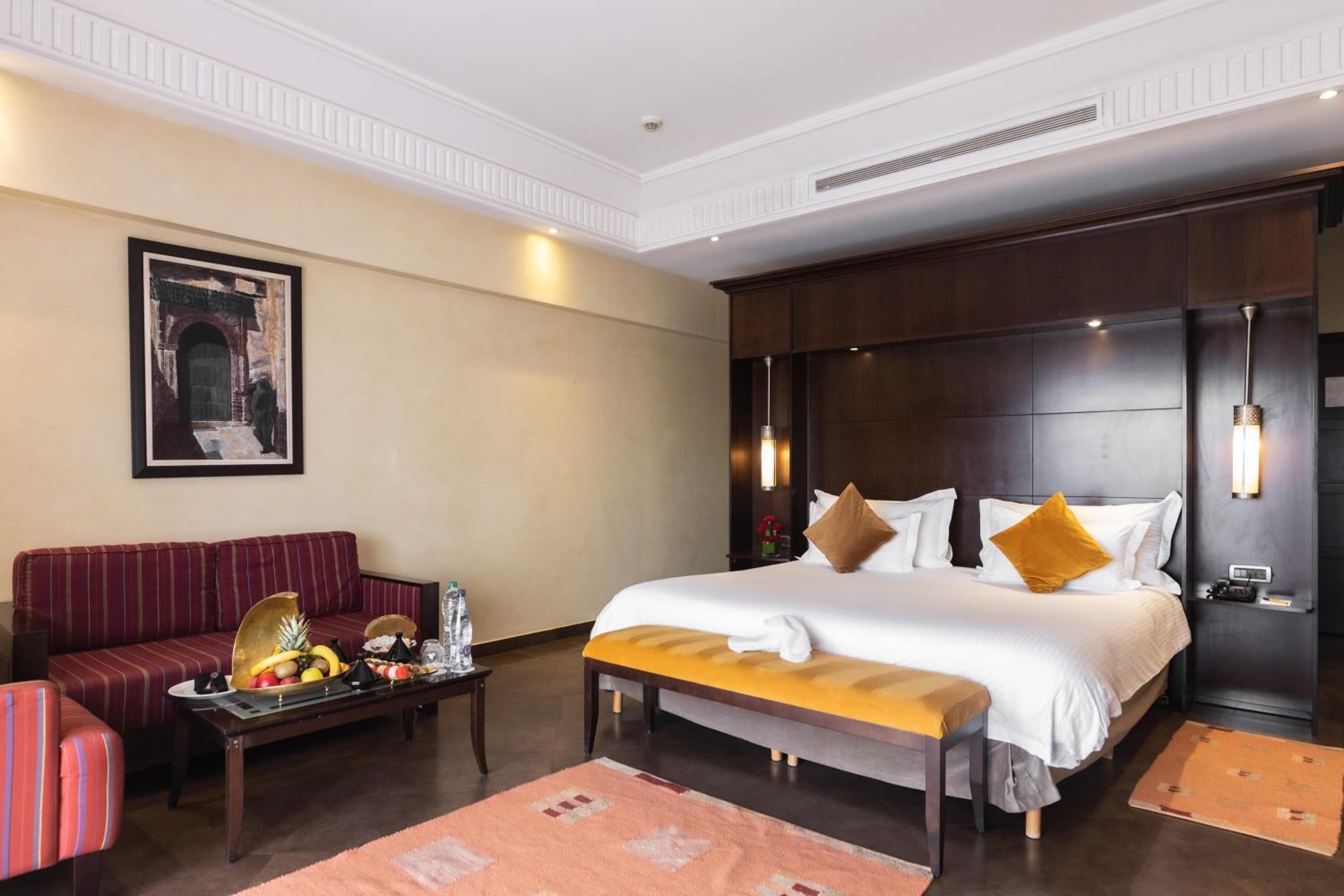
Kenzi Menara Palace & Resort
Marrakech, Morocco
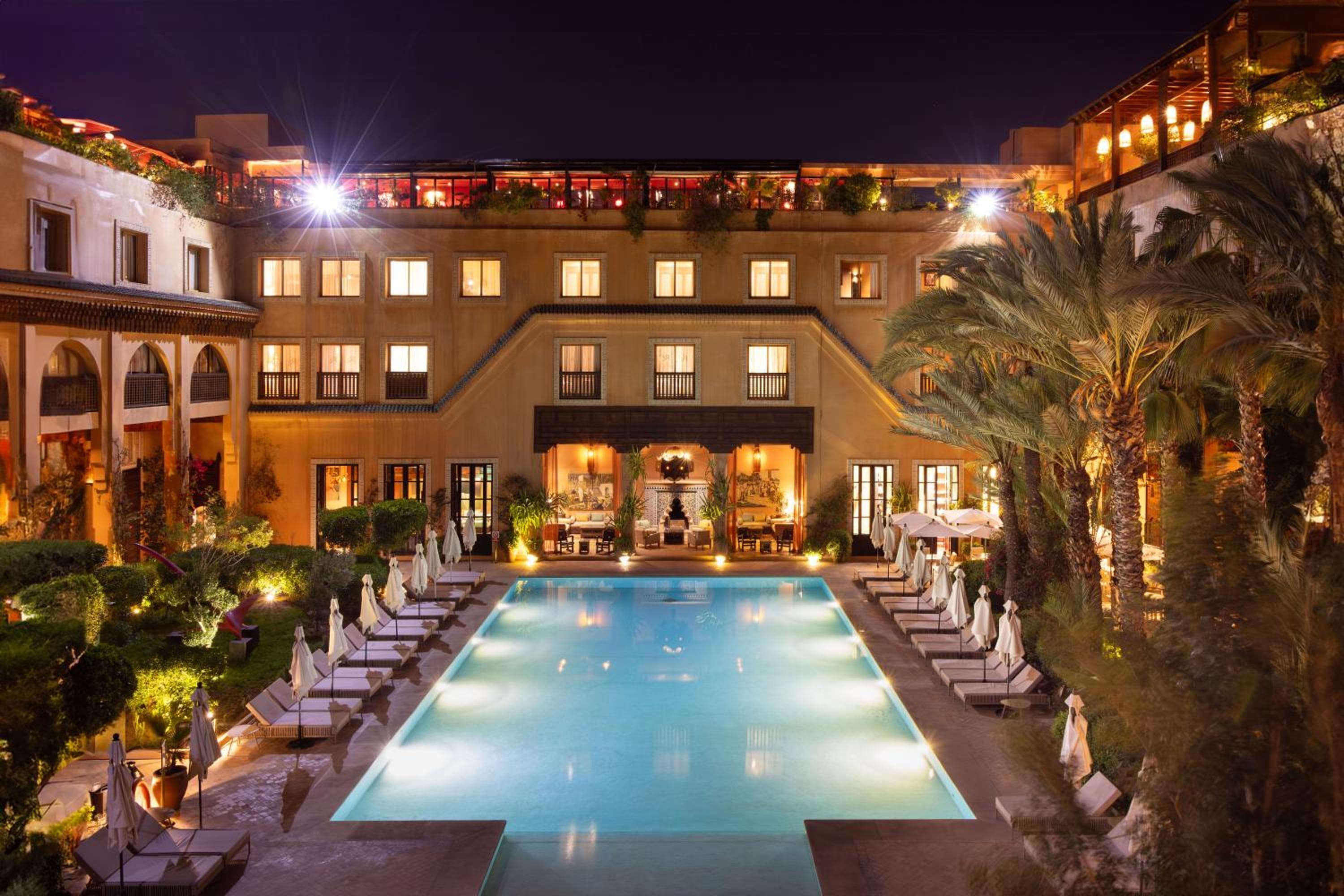
Les Jardins De La Koutoubia
Marrakech, Morocco
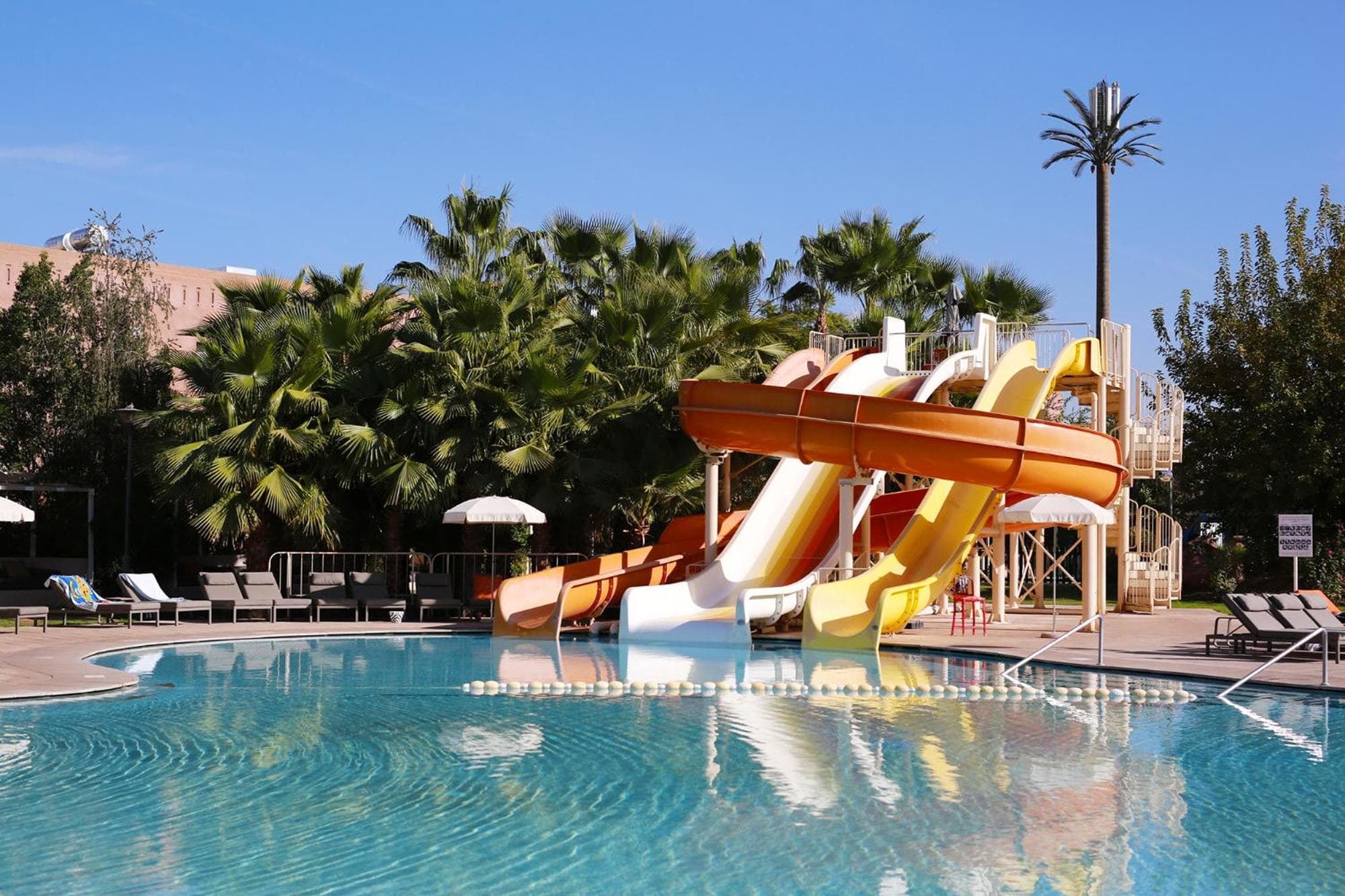
Kenzi Club Agdal Medina - All Inclusive
Marrakech, Morocco
When to go
March – May
18–28°C, occasional light rain
The best time to visit. Spring flowers in the Atlas, perfect pool weather, and the city before the summer heat sets in.
June
28–35°C, dry
Hot but manageable. The shoulder season — prices drop and crowds thin before peak summer.
July – August
38–44°C, very dry
Genuinely hot. The riads are cool inside, but outdoor exploration is limited to mornings and evenings. Avoid unless you love heat.
September – October
24–32°C, clear
Our top recommendation. Warm but not punishing, the city reopens fully after summer, and the Atlas is at its most beautiful.
November – February
12–20°C, can be cold at night
The low season — significantly cheaper. The Medina in winter has a different, quieter quality. Sahara trips are actually better (cooler desert air, clearer stars).
Insider tips
- Negotiate everything in the souks — the first price is 3–4x the fair price. Start at 30% of the ask and meet in the middle.
- Dress modestly in the Medina: covered shoulders and knees for everyone. You'll be more comfortable and receive better service.
- Book your riad well in advance. The best properties (under 10 rooms) sell out months ahead in peak season.
- The best hammam experience isn't in a tourist hotel — our concierge books local hammams with a private session and traditional gommage scrub.
- Djemaa el-Fna is safest and most atmospheric between 7–10pm. Stay aware of your belongings and keep one hand on your bag.
- Tap water is not safe to drink. All good riads and hotels provide bottled water — check it's included in your rate.
- Day trips: Essaouira (coastal city, 3h by bus), Ourika Valley (Atlas, 1h), Ait Benhaddou (4h). Our concierge arranges private car + driver.
FAQ
Is Marrakech safe for tourists?+
Yes, it's generally safe — Morocco has one of the lowest crime rates in Africa and a strong tourist police presence in the Medina. The main annoyances are persistent street touts and unofficial 'guides' who approach unprompted. A confident, purposeful walk and a polite but firm 'la shukran' (no thank you) handles 95% of situations. Our concierge can connect you with a legitimate licensed guide for the first day.
How many days do I need in Marrakech?+
Three to four days covers the city well: one day for the Medina and souks, one for a day trip (Atlas or Essaouira), one for pure riad relaxation. A week is ideal if you want to do a Sahara extension — an overnight desert camp is one of the most extraordinary experiences any of our members have reported.
Riad or hotel — which is better?+
For authentic Marrakech, a riad every time. These converted townhouses with central courtyard pools offer a level of quiet and personal service that no hotel lobby can match. The best riads have 4–8 rooms, a rooftop terrace, and a cook who prepares breakfast and dinner on request. Travel Club members access riad rates not publicly available on any booking platform.
Does Ramadan affect travel?+
It depends on your priorities. During Ramadan, most local restaurants are closed during the day, alcohol is harder to find, and the city has a different rhythm. That said, the nightly iftar (breaking of the fast) at Djemaa el-Fna is a genuinely extraordinary experience — nothing like it exists anywhere else. Avoid only if you need full restaurant access all day.
What currency should I bring?+
Moroccan Dirham (MAD). You can't obtain dirhams outside Morocco — exchange at the airport or use an ATM in the Medina. Credit cards are accepted at all riad and hotel properties, but the souks are cash-only. Rough budget: 100 MAD ≈ $10 USD. A good lunch at a local restaurant: 80–150 MAD.
Can I do a Sahara desert trip from Marrakech?+
Yes, but it requires 2 nights minimum — the Sahara (Merzouga or Zagora) is 8–9 hours from Marrakech by road. The standard itinerary is: drive via the Draa Valley and Dades Gorge, overnight in a luxury desert camp, camel ride at sunrise, return via Ouarzazate. Our concierge arranges private SUV transfers and secures the best camp positions.