Quick answers
- How warm is it in January?
- 20–23°C by day in the south of Tenerife and Gran Canaria, with sea temperatures around 19–20°C.
- Which side should I book?
- The south, on every island. The north catches the trade winds and is markedly cloudier and greener.
- Which island is sunniest in winter?
- Fuerteventura and Lanzarote are driest; the south of Gran Canaria and Tenerife are close behind and better served by flights.
- How long is the flight?
- Roughly 4h20–4h50 from London, Frankfurt, Vienna and Milan; about 4h30 from Zurich.
Why the north–south split matters so much
The trade winds hit the northern coasts and drop their moisture there. That gives the north of Tenerife laurel forest, banana plantations and a cloud layer that can sit for days — while Costa Adeje, 40 minutes south, is in full sun.
This is the single most consequential booking decision for a winter trip, and it is invisible on most hotel listings.
Island by island
Tenerife — the best all-rounder. Costa Adeje for sun and hotels, Teide in the middle, and the greener north if you want scenery over certainty.
Gran Canaria — Maspalomas and Meloneras for large resorts and long stays; Las Palmas if you want a real city with a good urban beach.
Lanzarote — driest and most striking, deliberately low-rise. Windier, which suits surfers and irritates sunbathers.
Fuerteventura — the best beaches and the least to do. Ideal if the beach is the plan.
What winter actually feels like
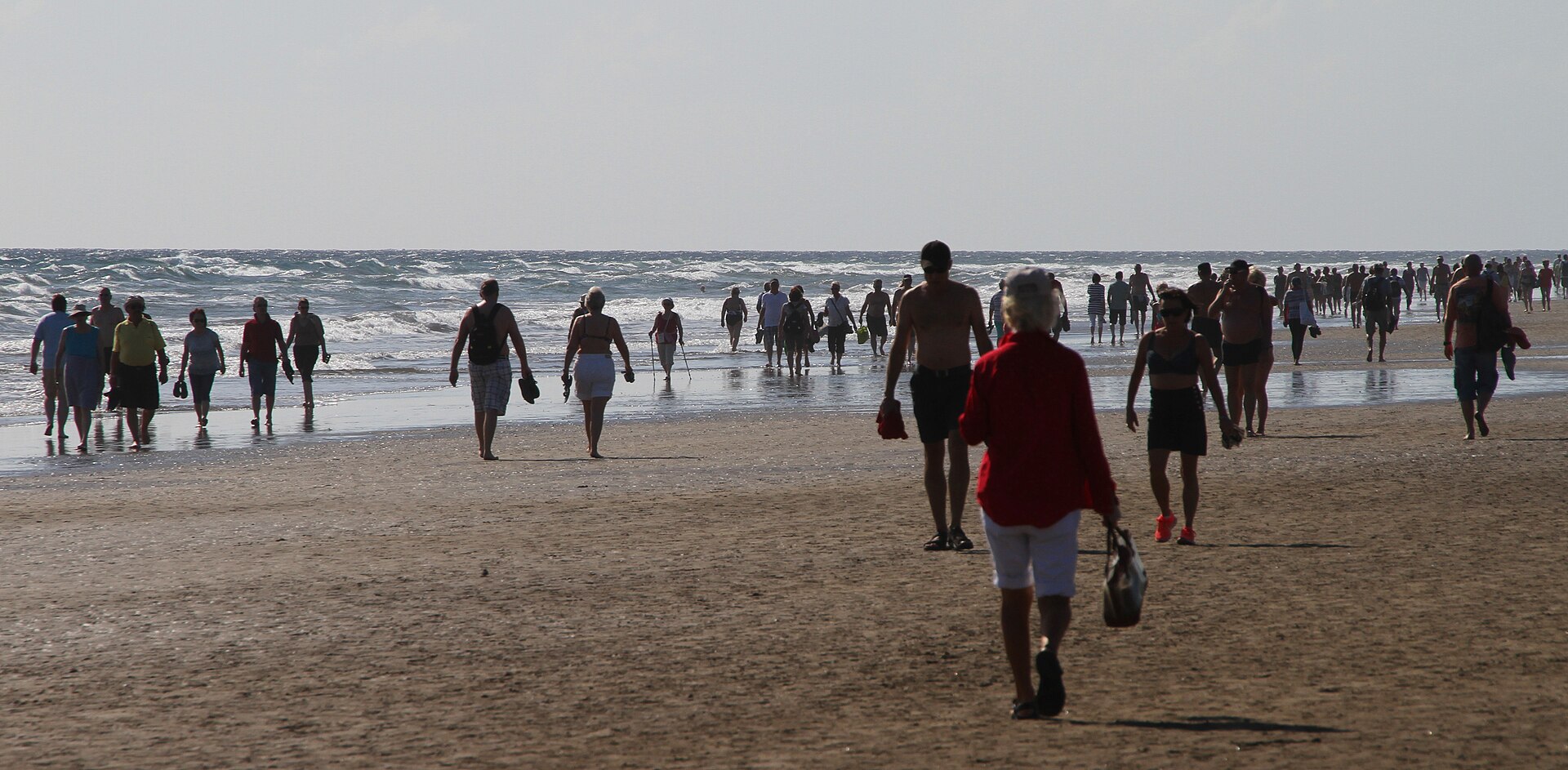
Expect 20–23°C, sea around 19–20°C, and evenings that need a jacket. It is warm rather than hot: pleasant for walking, marginal for lying still on a beach if there is any wind.
February is peak season for German and Austrian visitors, and rates reflect it. January and late November are noticeably cheaper for the same weather.
Long stays
The Canaries are one of the few European destinations where month-long winter rates are standard. Gran Canaria and Tenerife have the deepest supply of apartments and aparthotels geared to it.
See the Tenerife, Gran Canaria and Lanzarote area guides, or browse member rates on Canary Islands hotels.
Frequently asked questions
Do the Canary Islands use the same time as mainland Spain?
No. They are on WET — the same clock as the UK and Ireland, one hour behind Germany, Austria, Switzerland and Italy.
Is it warm enough to swim in January?
The sea sits around 19–20°C. Comfortable for many northern Europeans, cool for others; most hotel pools are heated.
Which island is best with young children?
Gran Canaria's south coast — short transfers, shallow beaches and the largest choice of all-inclusive resorts.
Is Christmas expensive?
Yes, sharply. The three weeks around Christmas and New Year are the most expensive of the winter.